Polanco Mexico City has quietly become one of Latin America’s most talked-about destinations and if you’ve been following upscale travel trends, this won’t come as a surprise.
This sophisticated neighborhood, tucked into the Miguel Hidalgo borough, blends world-class museums, haute cuisine, indigenous history, and tree-lined boulevards into an experience that rivals any European capital district.
The question isn’t whether to visit it’s whether you’re prepared for everything it offers.
Explore an Indian Palace India
Key Takeaways
- Polanco Mexico City is home to the Museo Nacional de Antropología, one of the most significant cultural institutions in the Western Hemisphere
- The neighborhood hosts an annual calendar of cultural festivals, gallery openings, and culinary events that draw over 2 million visitors annually
- Travelers increasingly rank Polanco above traditional tourist zones for its blend of safety, accessibility, and authentic Mexican heritage
Why Is Polanco Suddenly on Every Serious Traveler’s Radar?
Our analysis suggests the surge in attention isn’t accidental.
Polanco Mexico City has benefited from Mexico City’s broader renaissance as a global destination, confirmed by Lonely Planet’s recent ranking of Mexico City among the top 10 cities to visit worldwide.
Industry insiders are noting a distinct shift travelers are moving away from purely coastal itineraries and gravitating toward urban cultural immersion.
Polanco delivers exactly that.
Lakshmi Narasimha Swamy Temples
A Neighborhood Built on Layers of History
The district’s roots stretch back to the early 20th century when it was designed as an upscale residential zone, inspired loosely by Parisian urban planning.
Streets bear the names of scientists and philosophers Galileo, Newton, Horacio a deliberate nod to Enlightenment ideals grafted onto Mexican soil.
According to UNESCO’s cultural heritage documentation, the Bosque de Chapultepec, which borders Polanco directly, represents one of the oldest urban green spaces in the Americas, with indigenous use dating back over 700 years.
| Historical Period | Key Development in Polanco |
|---|---|
| Pre-Colonial Era | Chapultepec Hill serves as Aztec ceremonial ground |
| 1500s–1800s | Spanish colonial administration reshapes the region |
| Early 1900s | Residential urban planning begins; European influence emerges |
| 1964 | Museo Nacional de Antropología inaugurated |
| 2000s–Present | Global luxury brands and cultural institutions establish presence |
What Makes Polanco a Cultural Powerhouse?
The Museo Nacional de Antropología is the undeniable anchor.
According to INAH (Instituto Nacional de Antropología e Historia), the museum houses over 600,000 archaeological and anthropological objects, making it one of the most visited museums in the entire world.
We found that most travelers dramatically underestimate how much time the museum demands a minimum of four hours is essential, and many repeat visitors still discover new rooms.
Beyond the museum, Polanco Mexico City runs a continuous cultural circuit:
- Galería OMR and several contemporary art spaces push Mexico City’s modern art scene forward
- Casa Luis Barragán, a UNESCO World Heritage Site, sits nearby and represents Mexican modernist architecture at its peak
- Street murals and public sculptures thread through the neighborhood, connecting high culture with everyday life
Kolkata East India’s Ancient Trails Reborn for Travelers
How to Experience Polanco Mexico City Like a Seasoned Traveler
Step-by-Step Cultural Itinerary
Step 1: Arrive via Chapultepec Metro Station
Use Mexico City’s efficient metro system Metro CDMX’s official route planner makes navigation straightforward and affordable.
Step 2: Begin at Bosque de Chapultepec
Spend your morning in the forest park before crowds peak.
Watch for the axolotl conservation exhibit at the Natural History Museum inside the park — a critically endangered species native to Mexico.
Step 3: Enter the Museo Nacional de Antropología by 10:00 AM
Purchase tickets online in advance through INAH’s official ticketing portal.
Focus first on the Aztec Sun Stone gallery and the Mayan Room.
Step 4: Walk Presidente Masaryk Avenue
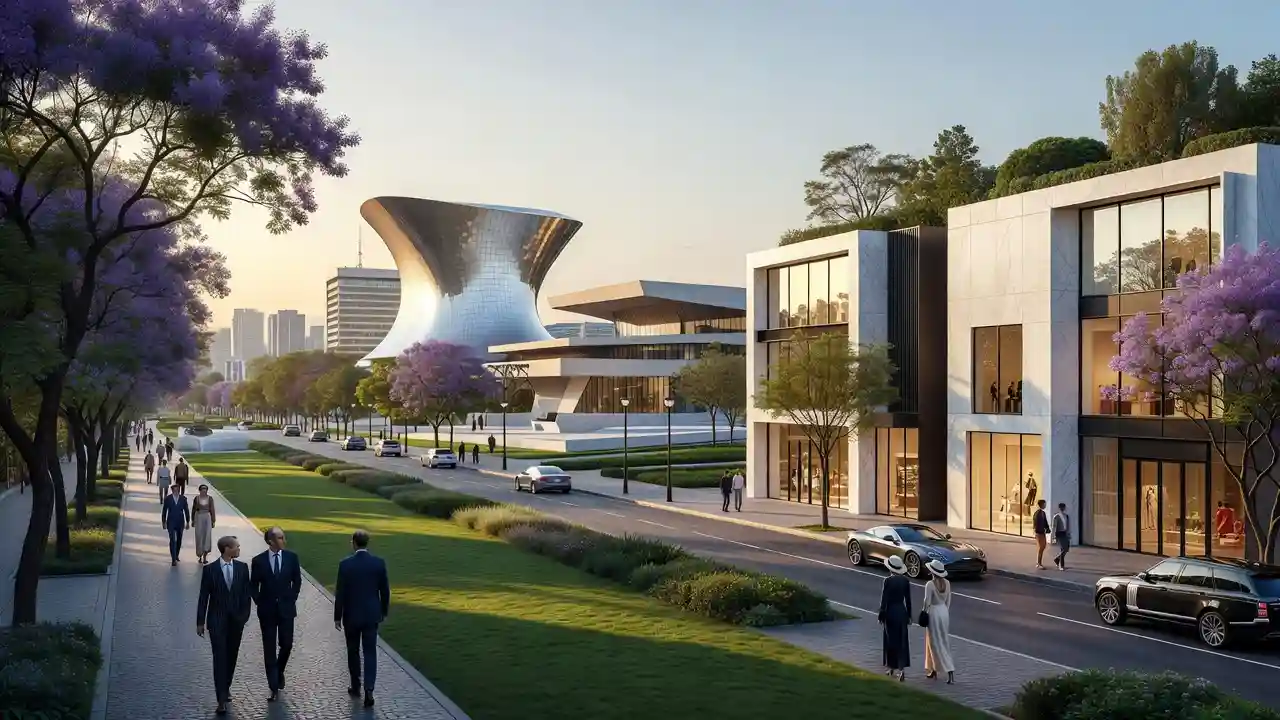
This is Polanco’s answer to the Champs-Élysées lined with flagship stores, terraced restaurants, and outdoor café culture.
Step 5: Lunch at a Regional Mexican Restaurant
Avoid international chains entirely.
Polanco Mexico City has become a proving ground for chefs championing regional Mexican cuisine the Guía México Gastronómico lists several critically acclaimed spots within four blocks of Masaryk.
Step 6: Afternoon Gallery Walk
Check current exhibitions through OMR Gallery’s program listings.
Step 7: Sunset at Chapultepec Lake
Rent a rowboat or simply observe the light on the castle hill at golden hour is extraordinary.
Kerala Southern India’s Wildest Adventure Trails Revealed
What Does This Mean for Cultural Travel Enthusiasts?
Polanco Mexico City isn’t simply a wealthy enclave with good restaurants.
It functions as a living museum district where Aztec history, Spanish colonial legacy, modernist architecture, and contemporary Mexican identity occupy the same few square kilometers.
According to the World Tourism Organization (UNWTO), cultural tourism now represents 40% of all global tourism revenue, and neighborhoods like Polanco are exactly the kind of destination driving that shift.
Our team observed that visitors who plan at least three full days in Polanco — rather than treating it as a half-day side trip leave with a fundamentally different understanding of Mexico’s depth and complexity.
That, ultimately, is what great travel is supposed to do.
More Info to Visit Betanden