
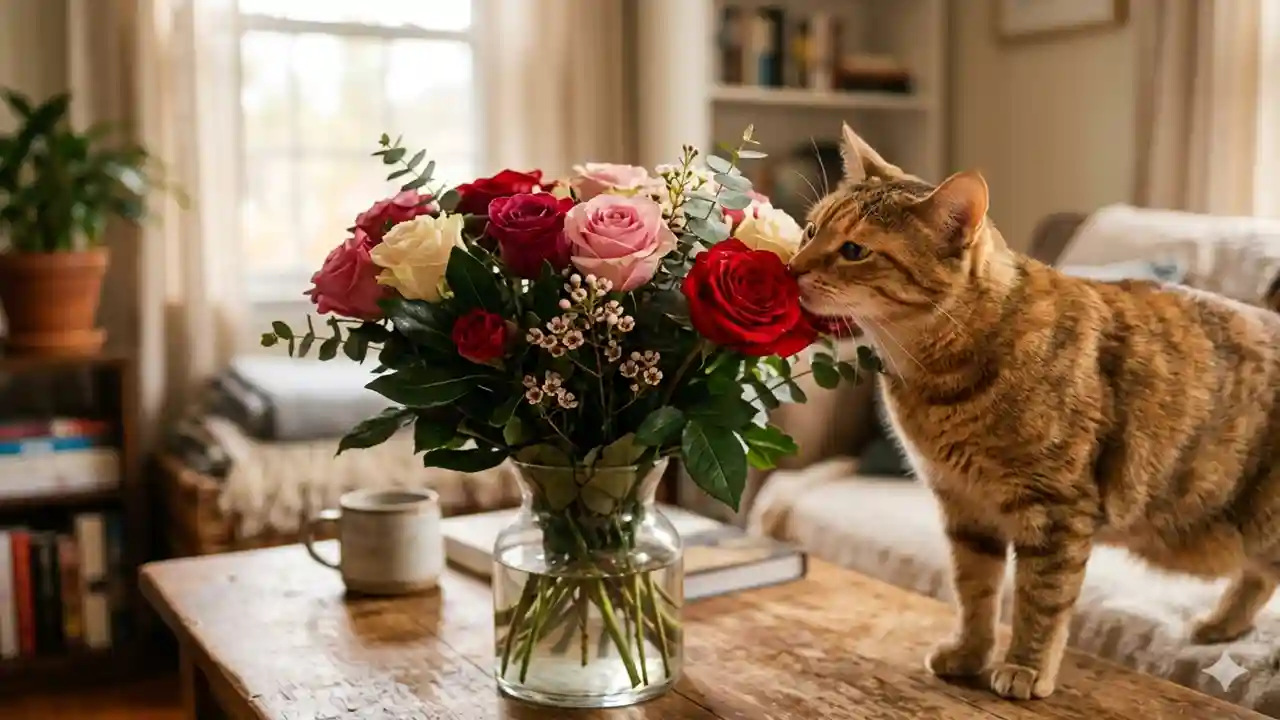
Emergency veterinary clinics report a sharp rise in feline flower ingestions during spring celebrations, forcing pet owners to urgently ask: are roses toxic to cats?
While a single nibble might not warrant panic, the hidden hazards accompanying these popular floral arrangements can trigger critical health complications for your feline companion.
Key Takeaways
- True roses (Rosa genus) are officially classified as non-toxic to felines by the ASPCA, though they still pose physical trauma risks.
- Chemical preservatives and topical pesticides applied by commercial florists present the highest risk of chemical poisoning to indoor pets.
- Severe floral look-alikes, particularly varieties carrying the “rose” moniker like Desert Roses, are highly lethal and require immediate medical intervention.
Cat Sneezing: What It Means for Your Pet’s Health
Why are floral trends worrying animal experts?
If you have been following digital animal lifestyle trends, this surge in plant-related emergency room visits won’t come as a surprise.
Our team observed that clean-living advocates frequently highlight pet-safe greenery, yet general consumer confusion remains dangerously high.
Pet owners regularly mistake toxic look-alikes for standard flora, leading to accidental exposures that could easily be prevented.
Our analysis suggests that the question of whether are roses toxic to cats requires a nuanced look at the entire plant structure.
The physical petals won’t poison your pet, but the sharp thorns lining the stems can cause severe lacerations to a cat’s mouth, throat, and sensitive digestive tract.
Furthermore, the dense commercial floral market heavily relies on systemic chemical treatments to keep inventory fresh during transport.
What do veterinary records say about the data?
We dug into data surrounding common household flora to understand how real roses stack up against other popular plants.
The variance in toxicity levels highlights why proper botanical identification is a literal matter of life and death for your animal.
Your Cat Sneezing a Lot Demands Quick Action
| Plant Common Name | True Botanical Family | Feline Toxicity Status | Primary Clinical Symptoms |
| True Rose | Rosa | Non-Toxic | Mild stomach upset, physical thorn scratches |
| Easter Lily | Lilium | Highly Toxic | Acute kidney failure, severe lethargy, fatalities |
| Desert Rose | Adenium | Highly Toxic | Vomiting, slow heart rate, extreme diarrhea |
| Christmas Rose | Helleborus | Toxic | Abdominal pain, drooling, seizures |
As shown in our compiled assessment, simply assuming a flower is safe because it has the word “rose” in its casual name is a major oversight.
Industry insiders are noting that mislabeling at local garden centers contributes significantly to toxic ingestions every single year.
How do hidden chemicals change the safety equation?
When exploring if are roses toxic to cats, we must evaluate the microscopic invisible layer covering commercial boutique arrangements.
Bouquets purchased from traditional florists are almost universally treated with chemical shelf-life extenders, anti-fungals, and industrial pesticides.
When a curious cat licks or chews on these treated petals, they ingest these concentrated chemical residues.
This ingestion causes immediate gastrointestinal distress that owners often mistake for simple hairballs.
The artificial plant food powder packets included with flower deliveries also contain high amounts of unrefined sugars and citric acid.
If these packets leak into the vase water, drinking that water can cause swift chemical poisoning in small animals.
How Moina Culture Reshapes Aquatic Artistry
How will this impact your home flower arrangements?
If you plan to keep fresh flora in your home, you must implement strict safety protocols to safeguard your curious pets.
Knowing whether are roses toxic to cats is only the first defensive step in managing an active multi-species household.
Steps to Safely Manage Flowers Around Cats
1.Strip All Thorns:Perform immediately upon purchase.
Use a mechanical stem stripper or kitchen shears to completely remove every single thorn from the rose stems.
This simple action prevents internal tissue punctures if your cat decides to playfully swat or bite the arrangement.
2.Wash the Stems and Petals:Clears away industrial chemical residue.
Thoroughly rinse the entire bouquet under cool, running tap water for two minutes to dilute any topical pesticide sprays.
Gently pat the petals dry with a paper towel before placing them into a clean container.
Can Dogs Eat Sweet Potatoes? Vet Warnings Issued
3.Secure the Vase Base:Prevents accidental tipping hazards.
Place the flowers into a heavy, wide-bottomed ceramic vase that your cat cannot easily knock over during an active zoomie episode.
Avoid fragile glass containers that can shatter and leave sharp, dangerous shards on your floor.
4.Restrict Physical Access:Utilize vertical height advantages.
Position the secured arrangement inside a room that your cat cannot access, or place it high on a secure shelf.
Ensure there are no nearby chairs or tables that your pet can use as a launching pad to reach the flowers.
How Long Are Cats Pregnant Can Save Lives
What should you do if your cat eats a flower?
Our analysis suggests that fast action dramatically improves recovery outcomes when pets consume unknown backyard vegetation.
If your cat targets your bouquet, look for immediate warning signs like heavy drooling, continuous vomiting, or sudden lethargy.
Do not wait for advanced clinical symptoms to appear if you suspect they ate a toxic look-alike variety.
Save the specific plant fragments or take a clear digital photograph of the flower to show to your local veterinarian.
This definitive visual proof allows the medical staff to choose the correct treatment protocol without wasting precious time.
Remember that while true are roses toxic to cats answers point to general safety, individual feline allergic reactions can still occur.
Are there safer green alternatives for your pet?
For pet owners who refuse to compromise on interior styling, the market offers several completely safe floral options.
Swapping out high-risk floral arrangements for verified pet-friendly options eliminates daily stress entirely.
- Boston Ferns: These lush, hanging green plants thrive indoors and offer a fun, safe texture for your cat to playfully swat at.
- Swedish Ivy: A beautiful cascading option that adds brilliant color to high shelves without risking your animal’s health.
- True Sunflowers: These bright, cheerful blooms are completely non-toxic to cats and lack any sharp physical thorns.
Ultimately, investigating whether are roses toxic to cats reveals that responsible pet ownership relies heavily on constant vigilance.
By source-checking your bouquets and removing physical hazards, you can enjoy beautiful floral designs while keeping your feline companion completely out of harm’s way.
More Info to Visit Betanden