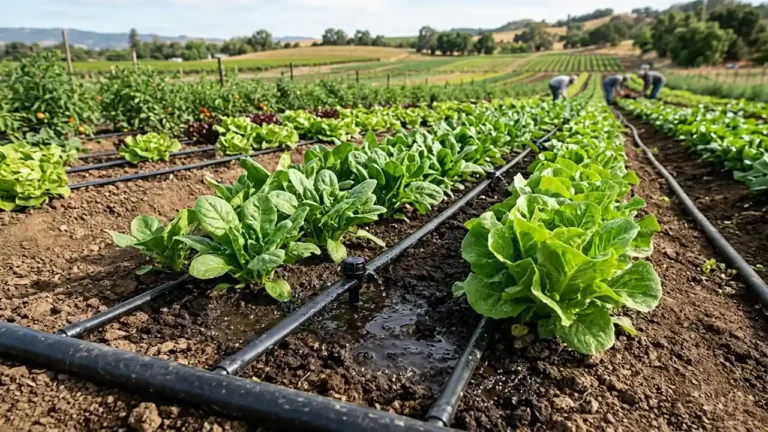

The agricultural technologist has quietly become one of the most important roles in modern food production.
We started tracking this shift because it touches everyone who eats.
Higher yields, lower costs, and steadier supply chains all trace back to these specialists right now.
Cop29 Climate Targets Cop29 Agriculture Decisions
Key Takeaways
- An agricultural technologist blends biology, data, and machinery to improve how crops and livestock are managed.
- Demand for these roles is climbing fast as farms adopt sensors, drones, and automated systems.
- Our analysis suggests the work directly affects food prices, quality, and availability on your table.
What Does an Agricultural Technologist Actually Do?
The job sits between the lab and the field.
Industry insiders are noting that the role has expanded far beyond soil testing.
A modern agricultural technologist studies crop performance, monitors animal health, and runs the technology that keeps a farm efficient.
They translate raw farm data into clear decisions.
We found their daily tasks often include:
- Calibrating precision sensors that measure soil moisture and nutrients.
- Reviewing drone imagery to spot disease before it spreads.
- Advising farmers on planting times, irrigation, and fertilizer use.
- Testing new seed varieties for yield and resilience.
This is hands-on science with real financial stakes.
One bad decision can cost a farm an entire season.
The Agricultural Research Council Reshapes
Why Is This Role Growing So Fast Right Now?
Two forces are pushing the change.
First, farms are under pressure to produce more with fewer resources.
Second, the tools have finally caught up.
Affordable sensors and software made advanced farming possible for smaller operations.
If you’ve been following agriculture trends, this won’t come as a surprise.
The labor pool is shrinking while demand for food keeps rising.
Our team observed that farms now compete for skilled technologists the way tech companies compete for engineers.
The title carries weight, and the pay reflects it.
Agriculture Food & Natural Resources
How Has the Role Changed Over Time?
The shift becomes clear when you compare the past with today.
We pulled together a simple timeline based on how responsibilities have moved.
| Era | Primary Focus | Main Tools | Skill Set |
|---|---|---|---|
| 1980s | Soil and crop basics | Manual testing kits | Field experience |
| 2000s | Equipment efficiency | GPS-guided tractors | Mechanical knowledge |
| 2010s | Data collection | Sensors and software | Basic data analysis |
| 2020s | Predictive farming | Drones, AI models | Data science plus biology |
The pattern is obvious.
Each decade added a layer of technology to the same core goal: better food, more reliably.

What Are the Pros and Cons of This Shift?
We weighed both sides before drawing conclusions.
No change this large comes without trade-offs.
Pros:
- Higher crop yields and less waste.
- Earlier detection of pests and disease.
- More stable food supply and prices.
- Lower environmental impact through precise resource use.
Cons:
- High upfront cost for technology and training.
- A steep learning curve for traditional farmers.
- Heavy reliance on stable internet and power.
- Risk of widening the gap between large and small farms.
Our analysis suggests the benefits outweigh the drawbacks over time.
The early costs remain the biggest hurdle for most operations.
Decoding H2 History A Level Questions
How Can You Become an Agricultural Technologist?
The path is clearer than many people expect.
We mapped out the steps based on what employers actually look for.
- Earn a relevant degree.
Focus on agricultural science, agronomy, or a related field. - Build a data foundation.
Learn spreadsheets, basic statistics, and farm management software. - Get field experience.
Intern on a working farm to understand real conditions, not just theory. - Master the tools.
Practice with drones, soil sensors, and crop-monitoring platforms. - Earn certifications.
Many regions offer credentials that prove your skills to employers. - Specialize.
Pick a focus such as livestock health, crop genetics, or precision irrigation. - Keep learning.
The field updates constantly, so ongoing training matters.
Follow these steps in order, and you build credibility at each stage.
That structure is what separates a hobbyist from a working agricultural technologist.
What Does This Mean for the Average Shopper?
The impact reaches your grocery cart.
Better farm management tends to stabilize prices and improve freshness.
We found that regions with more skilled technologists often report fewer supply shocks.
That means fewer empty shelves during tough seasons.
Quality also improves.
Precise growing methods produce more consistent fruits, vegetables, and grains.
Drip/Trickle Irrigation Saves Fresh Produce
Where Is This Headed Next?
The next wave centers on smarter prediction.
An agricultural technologist will soon rely on AI models that forecast weather, disease, and demand together.
Industry insiders are noting early experiments with fully automated greenhouses.
These systems adjust light, water, and nutrients without constant human input.
We expect the role to keep blending biology with software.
The technologists who learn both will lead the field.
Grain Silo Crisis It Means for Your Health
Our Final Take
This is one of the most practical career shifts in agriculture today.
The agricultural technologist sits at the center of how food gets grown, priced, and delivered.
We believe the role will only grow more essential.
For farmers, the message is clear: adapt or fall behind.
For everyone else, the takeaway is simpler.
The next time your food costs less or tastes better, an agricultural technologist likely played a part.
More Info to Visit Betanden