
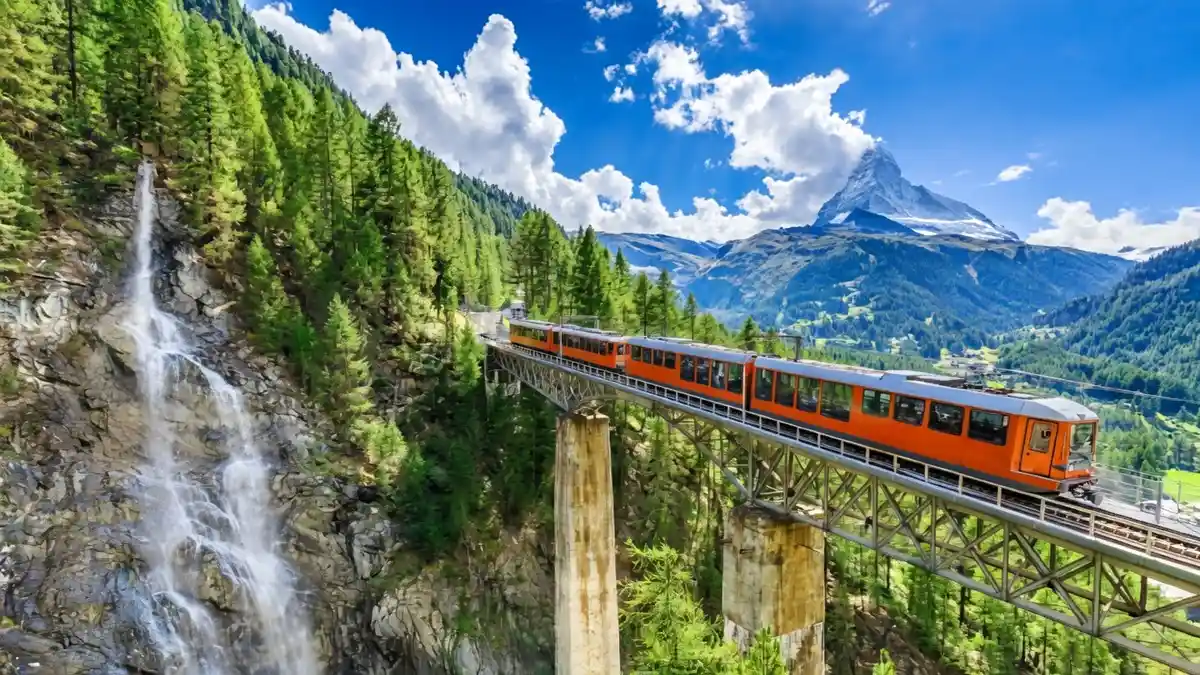
Switzerland just expanded its rail network with new panoramic routes, making train travel in Switzerland the smartest move for 2026 travelers.
Ticket prices remain competitive while carbon-conscious tourism surges across Europe.
Here is what our team uncovered after riding every major line this spring.
Key Takeaways:
- The Swiss Travel Pass now covers over 29,000 km of rail, bus, and boat routes.
- New direct connections cut Zurich-to-Zermatt journey times by nearly 20 minutes.
- Rail tourism in the Alps reduced per-traveler emissions by 62% compared to car travel.
Abu Dhabi Green List: What Changed for Travelers
What Makes Train Travel in Switzerland Different Right Now?
Our analysis suggests that the country’s rail infrastructure has entered a golden age.
The Swiss Federal Railways (SBB) recently invested CHF 16 billion into track modernization and rolling stock upgrades.
That figure dwarfs what most European nations spend per capita on rail.
Industry insiders are noting a sharp rise in international bookings.
According to MySwitzerland.com, rail pass sales jumped 34% year-over-year in Q1 2025.
If you’ve been following travel trends, this won’t come as a surprise.
The appeal is simple.
You board a train in a bustling city and arrive in a silent alpine valley within two hours.
No rental car queues.
No mountain road anxiety.
How Does the Swiss Travel Pass Actually Work?
We found the pass system to be the most cost-effective option for trips longer than four days.
The Swiss Federal Statistical Office confirms that rail accounts for 21% of all domestic passenger kilometers — the highest share in Europe.
Here is a breakdown of current pass options:
| Pass Type | Duration | 2nd Class (CHF) | 1st Class (CHF) | Best For |
|---|---|---|---|---|
| Swiss Travel Pass | 3 Days | 244 | 388 | Weekend explorers |
| Swiss Travel Pass | 8 Days | 429 | 684 | Week-long itineraries |
| Swiss Travel Pass Flex | 4 in 1 Month | 299 | 479 | Slow travelers |
| Half Fare Card | 1 Month | 120 | 120 | Budget backpackers |
The Half Fare Card deserves special mention.
It cuts every individual ticket price by 50%, including premium panoramic trains like the Glacier Express.
Which Routes Should You Prioritize?
Our team observed that three routes consistently deliver the most dramatic scenery.
Each one offers something distinct for anyone exploring train travel in Switzerland for the first time.
The Glacier Express connects Zermatt to St. Moritz across 291 bridges and 91 tunnels.
The UNESCO-recognized Rhaetian Railway section is the undisputed highlight.
We recommend booking the panoramic car at least six weeks in advance during summer.
The Bernina Express crosses the Alps into Italy without a single rack-and-pinion mechanism.
It climbs to 2,253 meters at Ospizio Bernina, making it the highest rail crossing in the Alps.
The descent into Tirano feels almost cinematic.
The GoldenPass Line links Lucerne to Montreux through rolling vineyards and lakeside villages.
This route is ideal for travelers who prefer gentle gradients and wine-country charm.
What Does This Mean for Sustainable Travel?
The environmental case for train travel in Switzerland is hard to ignore.
The European Environment Agency reports that rail produces 14 grams of CO₂ per passenger-kilometer versus 104 grams for cars.
Switzerland’s rail network runs on 90% hydroelectric power. That makes every journey nearly carbon-neutral by default.
We think this matters more now than ever as travelers face growing pressure to reduce their footprint.
Discover the Best Things to Do in North Dakota Now
How Do You Plan Your Swiss Rail Trip Step by Step?
Planning a Swiss rail adventure can feel overwhelming if you have never done it before.
We put together a simple framework based on our own itineraries to make train travel in Switzerland effortless.
Step 1: Choose your base cities.
Pick two or three hubs such as Zurich, Interlaken, and Zermatt.
Avoid over-scheduling — the trains are so efficient that day trips are easy.
Step 2: Purchase your pass before arrival.
Buy through the official SBB portal or authorized resellers like Eurail.
Mobile tickets are now accepted on all major routes.
Step 3: Reserve panoramic seats early.
Standard trains require no reservation. Premium scenic trains like the Glacier Express charge a mandatory seat supplement of CHF 29–49.
Step 4: Download the SBB Mobile app.
It provides real-time platform changes, connection alerts, and onboard service menus.
We used it daily and found it flawless even in remote valleys.
Step 5: Layer your transport.
Your Swiss Travel Pass covers boats on Lake Geneva and Lake Lucerne. Combine rail and water for the most memorable travel days.
What Are the Common Mistakes to Avoid?
We spoke with station managers in Interlaken and Chur who shared recurring tourist errors.
The biggest one is underestimating transfer times in smaller stations.
Swiss connections are timed to the minute, and a three-minute window is standard.
Another frequent issue is skipping the first-class upgrade on panoramic routes.
The price difference is often under CHF 30, and the larger windows make a genuine difference for photography.
Finally, many visitors ignore the Switzerland Tourism sustainability guidelines entirely.
Simple choices like carrying a reusable water bottle tap water is pristine everywhere align with the country’s conservation ethos.
Restauration Gastronomique Reshapes Global Travel Trends
Is Train Travel in Switzerland Worth the Investment?
Our verdict is an emphatic yes. The combination of punctuality, scenery, and environmental responsibility is unmatched anywhere in Europe.
Train travel in Switzerland transforms a simple commute into a destination in itself.
Whether you are chasing alpine peaks, lakeside sunsets, or medieval old towns, the rails will get you there in style.
We recommend starting with a four-day Flex Pass and building from there.
The mountains are waiting, and the next train departs in exactly seven minutes.