
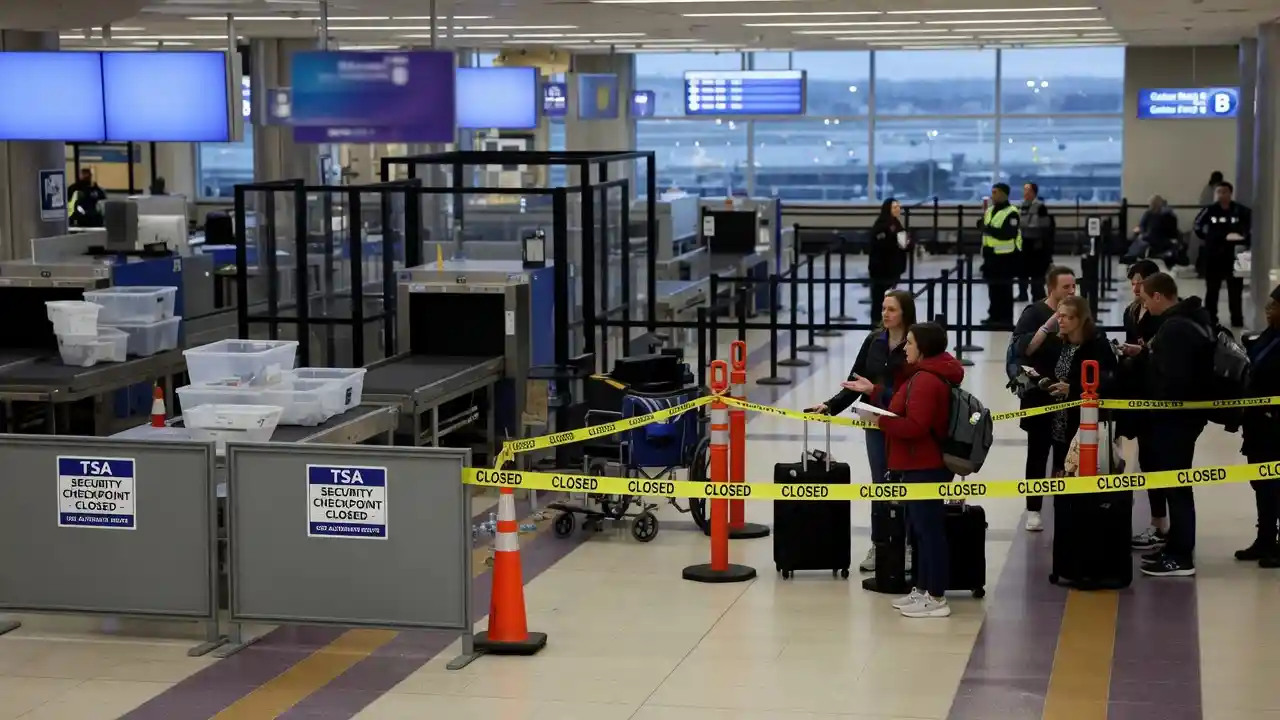
The TSA checkpoint Philadelphia closure crisis that gripped the city’s airport earlier this year sent a clear message to every traveler in the region: your airport routine can change overnight.
Two additional Philadelphia International Airport security checkpoints closed as the partial federal government shutdown entered its second month.
If you’ve been following travel trends in 2026, this won’t come as a surprise but the ripple effects are still being felt.
Portuguese Phrases for Travel Before You Go
Key Takeaways
- Philadelphia International Airport had only half of its six main checkpoints open and operating at the height of the crisis.
- TSA absences surged during the partial shutdown, and more than 350 officers quit, according to internal TSA statistics.
- All three closed security checkpoints at Philadelphia International Airport have since reopened, but experts warn the system remains fragile.
What Caused the TSA Checkpoint Philadelphia Closure?
The root cause was straightforward and deeply political.
The partial government shutdown began February 14 and impacted Department of Homeland Security funding, which includes TSA.
Philadelphia International Airport’s Terminal C security checkpoint was the first to be temporarily closed by the Transportation Security Administration due to staffing shortages caused by the federal government shutdown.
Within days, the situation escalated rapidly.
TSA temporarily closed its checkpoints at Terminal A-West and Terminal F.
Our analysis suggests the TSA checkpoint Philadelphia closure was not an isolated event — it reflected a nationwide crisis.
TSA staffing shortages led to shockingly long lines at airports serving Houston, New Orleans, Atlanta, and other locations.
According to the latest data from TSA.gov, the agency’s workforce was stretched past its breaking point.
Best Places to Travel With Kids
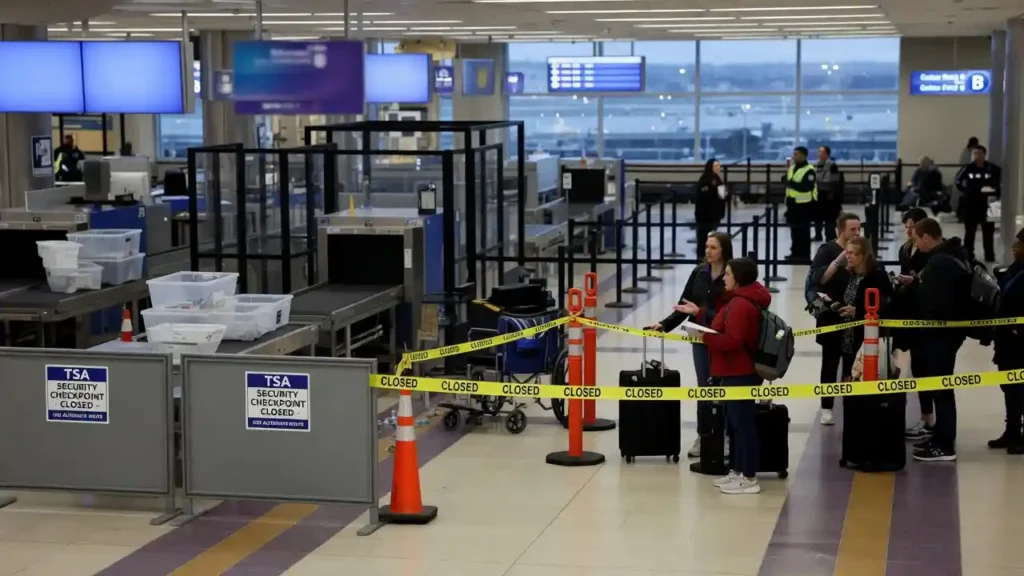
How Bad Did It Get at Philadelphia Airport?
Worse than most travelers expected.
On Thursday morning, there were long security lines stretching all the way to baggage claim at one point.
The acting head of the TSA said airports across the country were experiencing the “highest wait times in TSA history.”
Industry insiders noted that Philadelphia, as a major East Coast hub, felt the impact acutely.
The DHS spokesperson shared alarming numbers with Travel + Leisure: this period saw the highest call-out rate since the shutdown began, with 11.5 percent of all TSA officers not coming to work on Saturday.
Acting TSA Administrator Ha Nguyen McNeill testified that before the shutdown, the TSA’s absence rate hovered at about 4%, but during the crisis, “40 to 50% of their staff are calling out” because they could not afford to work without pay.
TSA Checkpoint Philadelphia Closure: Terminal-by-Terminal Timeline
| Terminal | Closure Date | Reopening Date | Notes |
|---|---|---|---|
| Terminal C | March 12, 2026 | April 2, 2026 | PreCheck only |
| Terminal A-West | March 18, 2026 | April 3, 2026 | Serves international travelers |
| Terminal F | March 18, 2026 | April 7, 2026 | Last to reopen |
What Should You Do if a TSA Checkpoint Philadelphia Closure Happens Again?
We found that travelers who prepared in advance navigated the disruption with far less stress.
Here’s a step-by-step plan:
- Check the PHL Airport website before leaving home.
Checkpoint status updates are posted in real time. - Arrive significantly earlier than usual.
The airport recommends arriving 2.5 hours before domestic flights and 3.5 hours before international flights during any TSA checkpoint Philadelphia closure period. - Know your alternate checkpoint.
People flying from A-West should use the A-East checkpoint; those from Terminal C should use Terminal B; travelers from Terminal F should use the D/E checkpoint. - Enroll in TSA PreCheck or Global Entry.
TSA PreCheck remains available at Terminals A-East and D/E even during closures, which can dramatically cut wait times. - Remember: all terminals connect post-security.
After being screened at a checkpoint, passengers can walk from one terminal to another without exiting and re-entering security. - Monitor social media.
The @PHLAirport account on X provided real-time closure and wait-time updates throughout the crisis.
Destinations To Visit In Japan
How Does the TSA Checkpoint Philadelphia Closure Affect Summer Travel?
The closures have ended, but the aftershocks remain a serious concern.
Nearly 500 TSA workers quit since the shutdown started, and thousands continued to call out.
Because it takes four to six months to train transportation security officers, any new hires will not be ready to work checkpoints until well after the 2026 FIFA World Cup.
That’s a critical detail for anyone booking summer travel through PHL, as noted in reporting by NPR and The Guardian.
The partial government shutdown that left DHS unfunded for 75 days ended in late April, but the toll it has taken on the TSA may still be felt for months to come, experts have warned.
The Bigger Picture for U.S. Air Travel
Our team observed that the TSA checkpoint Philadelphia closure wasn’t just a local inconvenience — it was a stress test that the nation’s airport security system largely failed.
Hartsfield-Jackson Atlanta International Airport, one of the busiest airports in the world, experienced a 76.9% decline in average daily TSA throughput between March and May 2026 compared with the same period in 2025.
According to data from Upgraded Points and CNBC, Philadelphia was far from alone.
The bottom line: Even with all checkpoints now restored, the TSA checkpoint Philadelphia closure exposed vulnerabilities that won’t be fixed by simply flipping the “open” sign back on.
Travelers should plan ahead, stay informed through official channels like DHS.gov and PHL.org, and treat every airport visit in 2026 as one that might require extra time.
More Info to Visit Betanden