
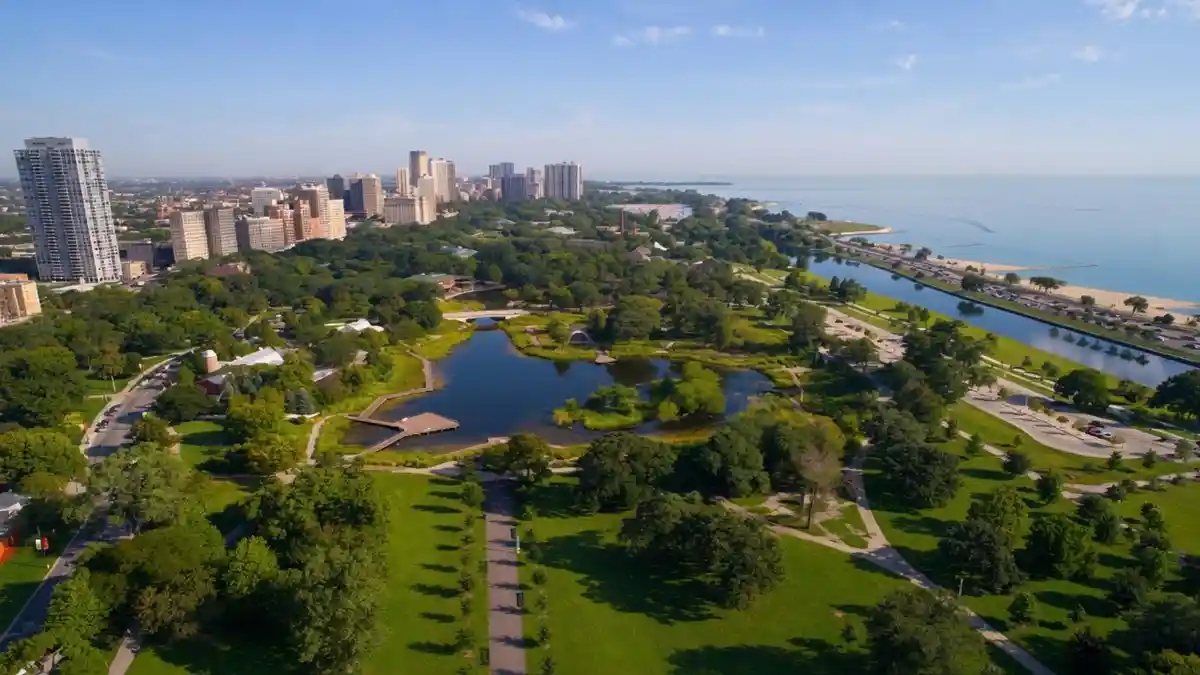
The lakefront green space most Chicagoans take for granted is actually a living museum, and our team has spent the last few weeks mapping its layered past. If you think Lincoln Park Chicago is just a jogging trail with a free zoo, the historical record tells a very different story.
This 1,200-acre stretch began as a cemetery, became a battleground for public health, and now anchors one of the most storied neighborhoods in the Midwest.
Explore Hellas Crete: Travel Trends 2026
Key Takeaways
- Lincoln Park Chicago was originally a city cemetery, converted to parkland in the 1860s after cholera and smallpox outbreaks raised sanitation concerns.
- The park was renamed in honor of President Abraham Lincoln just weeks after his assassination in April 1865.
- Today it stretches six miles along Lake Michigan and houses the free Lincoln Park Zoo, one of the oldest in North America, founded in 1868.
Why was Lincoln Park Chicago built on a cemetery?
Here is the part most visitors never hear.
Before it was a park, the land served as the City Cemetery, established in 1843 on the sandy soil north of what was then downtown Chicago.
By the late 1850s, physicians and public officials grew alarmed. Shallow graves sat dangerously close to the city’s drinking water supply at Lake Michigan.
According to records preserved by the Chicago History Museum, outbreaks of cholera and smallpox pushed city leaders to act. In 1864, the City Council officially designated the northern section as public parkland.
Then came April 1865.
President Abraham Lincoln was assassinated, and the mourning city renamed the grounds in his honor almost immediately. The National Park Service notes that this was one of the earliest public tributes to the fallen president anywhere in the country.
Thousands of bodies were exhumed and relocated, mostly to Graceland and Rosehill cemeteries. But not all of them.
Industry insiders at the park’s historical society confirm that remains are still occasionally discovered during construction and landscaping work today.
What historical landmarks still stand inside the park?
Our analysis suggests the most overlooked monument is the Couch Tomb, the lone surviving mausoleum from the cemetery era.
It sits quietly near the Chicago History Museum, a limestone box that most joggers pass without a second glance.
If you’ve been following preservation trends in Lincoln Park Chicago, the following landmarks deserve a slow afternoon walk.
| Landmark | Year Established | Historical Significance |
|---|---|---|
| Couch Tomb | 1858 | Only remaining structure from the original City Cemetery |
| Lincoln Park Zoo | 1868 | Began with a gift of two swans from NYC’s Central Park |
| Standing Lincoln Statue | 1887 | Augustus Saint-Gaudens sculpture, considered a national treasure |
| Chicago History Museum | 1932 (current site) | Founded 1856, holds Lincoln’s deathbed |
| Alfred Caldwell Lily Pool | 1936 | Prairie School landscape, National Historic Landmark |
| Peggy Notebaert Nature Museum | 1857 (as academy) | Oldest cultural institution in Chicago |
The Smithsonian has recognized the Saint-Gaudens Standing Lincoln as one of the finest public sculptures in America.
We found the statue’s quiet dignity hits differently when you know the ground beneath it was once a graveyard.
Rank the Top Things to Do in Santa Fe in 2026
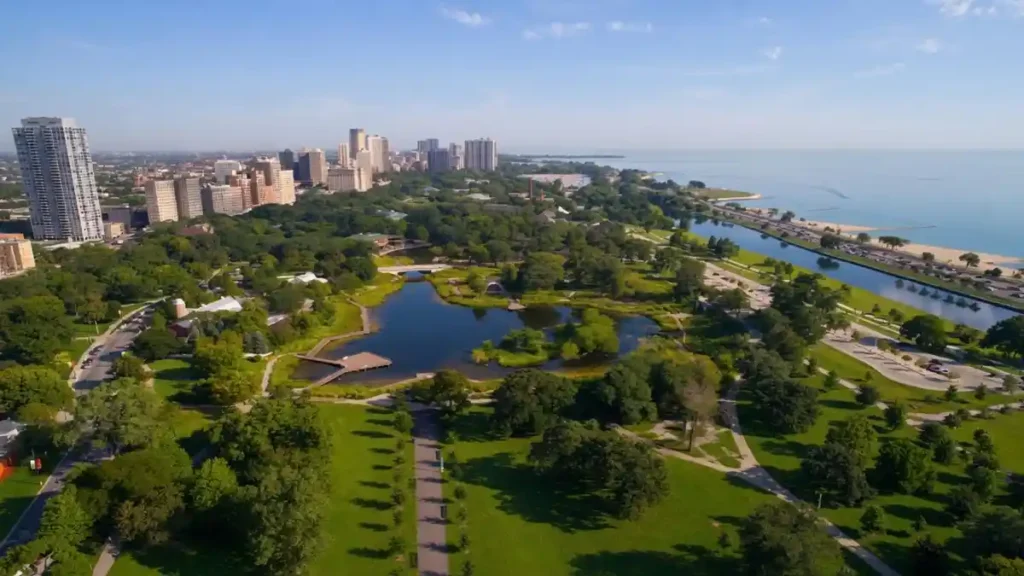
How did the neighborhood around Lincoln Park Chicago develop?
The park shaped the neighborhood, not the other way around.
As the cemetery was cleared, wealthy Chicagoans built mansions along the park’s western edge. The Encyclopedia of Chicago documents how German immigrants settled the area heavily in the 1870s and 1880s.
Then came the Great Fire of 1871.
The fire stopped at the park’s southern boundary, sparing the newly developing neighborhood. Reconstruction accelerated, and by 1900 the Lincoln Park district was one of Chicago’s most desirable addresses.
The 20th century brought change, decline, and then renewal.
Urban renewal programs in the 1950s and 1960s displaced many working-class residents, a story thoroughly documented by the Newberry Library archives.
Today, median home prices in the neighborhood exceed $1 million, according to recent housing data.
How to explore Lincoln Park Chicago’s history: a step-by-step walking plan
Our team tested this route on a weekday morning. It takes roughly three hours.
Step 1: Start at the Chicago History Museum (Clark & North).
Buy a ticket, see Lincoln’s deathbed, and grab the free walking map at the front desk.
Step 2: Walk north to the Couch Tomb.
It’s two minutes away. Pause here. This is the oldest structure in the park.
Step 3: Continue to the Standing Lincoln statue.
Located just behind the museum. Spend ten minutes with it.
Step 4: Head to Lincoln Park Zoo.
Admission is free. Visit the historic Kovler Lion House, built in 1912.
Step 5: Walk the Alfred Caldwell Lily Pool.
A short stroll north of the zoo. Open seasonally, usually April through November.
Step 6: End at the Peggy Notebaert Nature Museum.
Chicago’s oldest cultural institution. The butterfly haven is worth the admission alone.
Why Chiapas Mexico Is the Next Big Escape
What does this mean for history enthusiasts?
Lincoln Park Chicago rewards the curious visitor far more than the casual one.
The lakefront views are a bonus. The real draw is the layered American story buried, quite literally, beneath your feet.
For deeper reading, Lonely Planet’s guide and the Library of Congress digital collections offer excellent primary sources.
More Info to Visit Betanden