
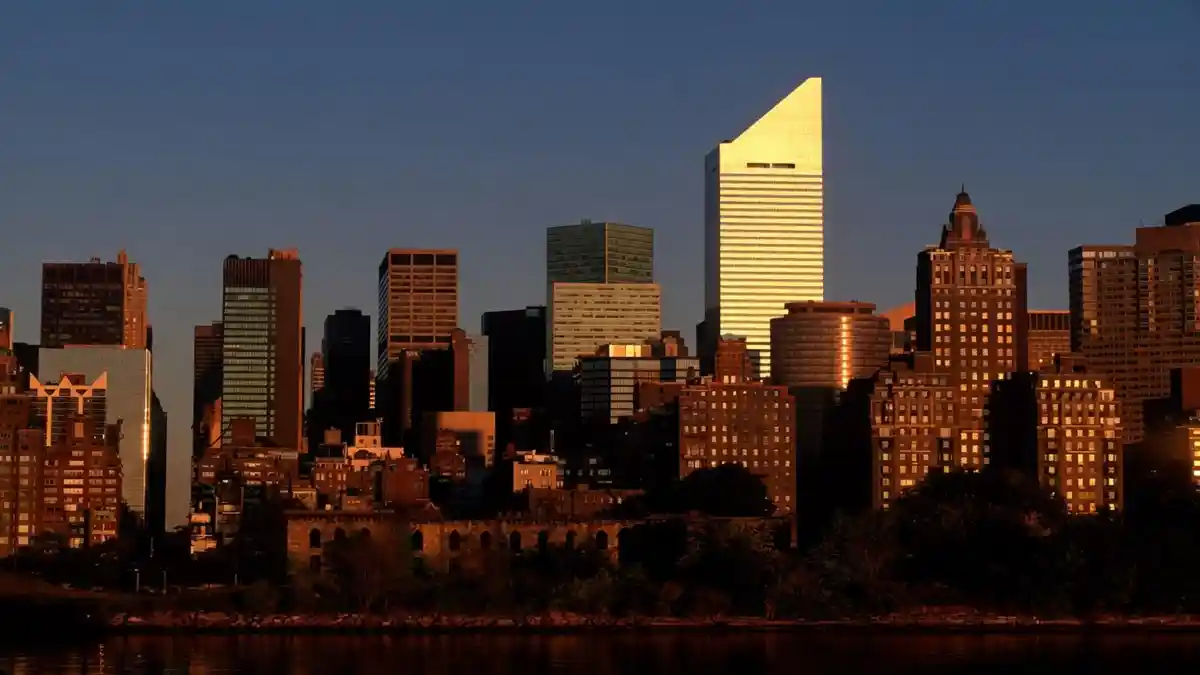
The structural crisis at 601 Lexington Avenue New York remains one of the most dramatic engineering stories in modern history.
A hidden flaw discovered in 1978 nearly toppled a 59-story tower above Midtown Manhattan, and the covert repair effort changed building codes forever.
Key Takeaways:
- A wind-load miscalculation threatened the entire tower’s structural integrity in 1978.
- Emergency welds were installed nightly while thousands of workers remained inside.
- The incident permanently reshaped structural engineering standards across the United States.
Best Road Trip Routes in Europe to Drive Now
What Really Happened at 601 Lexington Avenue New York?
Our analysis suggests that most visitors walking past 601 Lexington Avenue New York have no idea they are staring at a near-disaster.
The tower, originally called the Citigroup Center, was designed by architect Hugh Stubbins and structural engineer William LeMessurier.
It opened in 1977 with a striking angled roof and a dramatic cantilevered base.
The building rests on four massive nine-story stilts positioned at the center of each face rather than at the corners.
That unconventional choice created the vulnerability.
According to the Council on Tall Buildings and Urban Habitat, the stilt placement made the structure unusually sensitive to diagonal wind forces.
In June 1978, engineering student Diane Hartley raised a question about the building’s wind bracing during a class assignment.
Her inquiry prompted LeMessurier to re-examine his own calculations.
What he found was alarming. The bolted joints connecting the chevron braces were significantly weaker than the welded joints specified in the original design.
How Close Was the Building to Failure?
Industry insiders are noting that this remains the closest a modern skyscraper has come to catastrophic collapse.
LeMessurier calculated that a storm occurring once every 16 years could generate enough force to topple the structure.
New York City experiences such storms with disturbing regularity.
The National Institute of Standards and Technology has since cited this case in multiple reports on wind engineering and structural resilience.
If you’ve been following history trends in urban architecture, this won’t come as a surprise.
The margin of safety was far thinner than anyone outside the engineering team realized.
Best Road Trip Routes in Europe to Drive Now
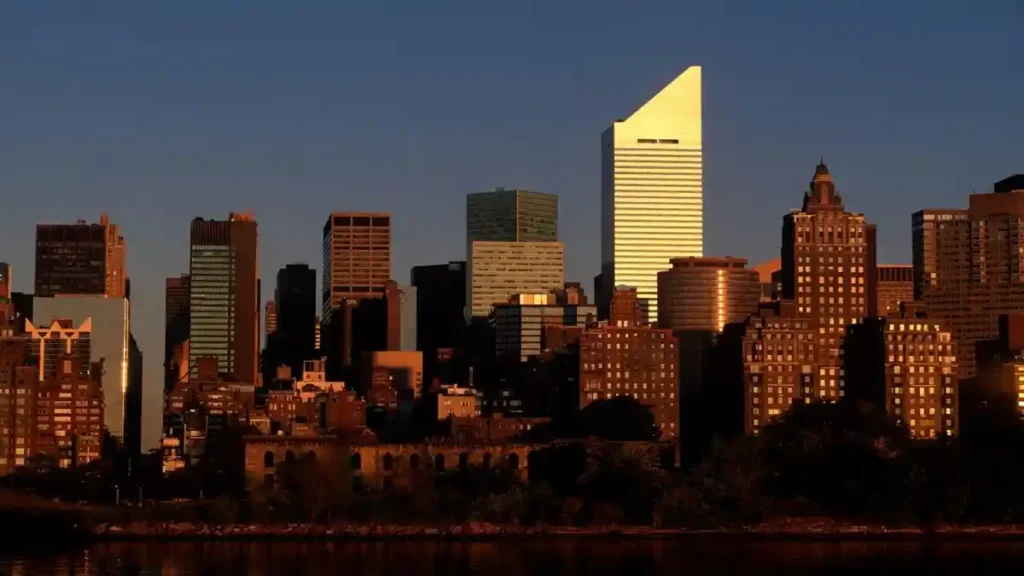
LeMessurier quietly alerted Citigroup executives and city officials.
A secret repair plan was launched within weeks.
| Year | Event | Significance |
|---|---|---|
| 1977 | Tower opens to tenants | Celebrated as an architectural triumph |
| June 1978 | Wind-load flaw discovered | LeMessurier recalculates diagonal wind stress |
| July 1978 | Emergency repairs begin | Nightly welding of 200+ bolted joints |
| August 1978 | Hurricane Ella approaches | Evacuation plans drafted; storm veers away |
| October 1978 | Repairs completed | Building declared structurally sound |
| 1995 | Story published publicly | The New Yorker breaks the full narrative |
The data above, cross-referenced with reporting from The New York Times, illustrates just how narrow the window of danger truly was.
What Does This Mean for History Enthusiasts?
Our team observed that the story of 601 Lexington Avenue New York offers a rare window into the intersection of ego, ethics, and engineering.
LeMessurier chose transparency over self-preservation, a decision the American Society of Civil Engineers now holds up as a model of professional responsibility.
The building was renamed in 2009 after Citigroup moved its headquarters.
Today, it stands as a landmark of both ambition and humility.
The NYC Landmarks Preservation Commission has recognized the surrounding Midtown East district for its concentration of architecturally significant towers.
601 Lexington Avenue New York anchors that skyline with a history most pedestrians never pause to consider.
We found that structural engineers still study this case in graduate programs worldwide.
Engineering News-Record has called it the most important structural engineering story of the 20th century.
Why Turks- és Caicos-Szigetek Surges
How Can You Explore the Site Today?
If you are planning a visit to 601 Lexington Avenue New York, here is how to make the most of the experience.
Step-by-Step Visitor Guide:
- Start at the plaza level on Lexington Avenue between 53rd and 54th Streets.
The cantilevered base is visible from street level and remains breathtaking. - Walk the full perimeter to observe the four massive stilts.
Notice how the building appears to float above St. Peter’s Church, which sits directly beneath one corner. - Look up at the angled roof.
The 45-degree slant was originally designed to house solar panels, though that plan was quietly abandoned. - Visit during golden hour for the best photographic angles.
The reflective aluminum facade catches light in ways that shift dramatically throughout the afternoon. - Stop by the nearby Museum of Modern Art on 53rd Street for context on Midtown’s architectural evolution.
Smithsonian Magazine has published excellent walking-tour guides for this corridor. - Read the informational plaque near the building’s main entrance for a brief official history.
The full story, of course, is far more dramatic than any plaque can convey.
Why This Story Still Matters
The crisis at 601 Lexington Avenue New York forced the entire engineering profession to confront an uncomfortable truth.
Buildings can fail even when they appear finished and fully occupied.
Modern wind-tunnel testing and computer modeling owe a significant debt to the lessons learned here.
Federal safety guidelines now require far more rigorous peer review for unconventional structural designs.
We believe this tower deserves a place on every history-minded traveler’s New York itinerary.
It is a monument not to perfection, but to the courage required to fix a catastrophic mistake before it was too late.
More Info to Visit Betanden