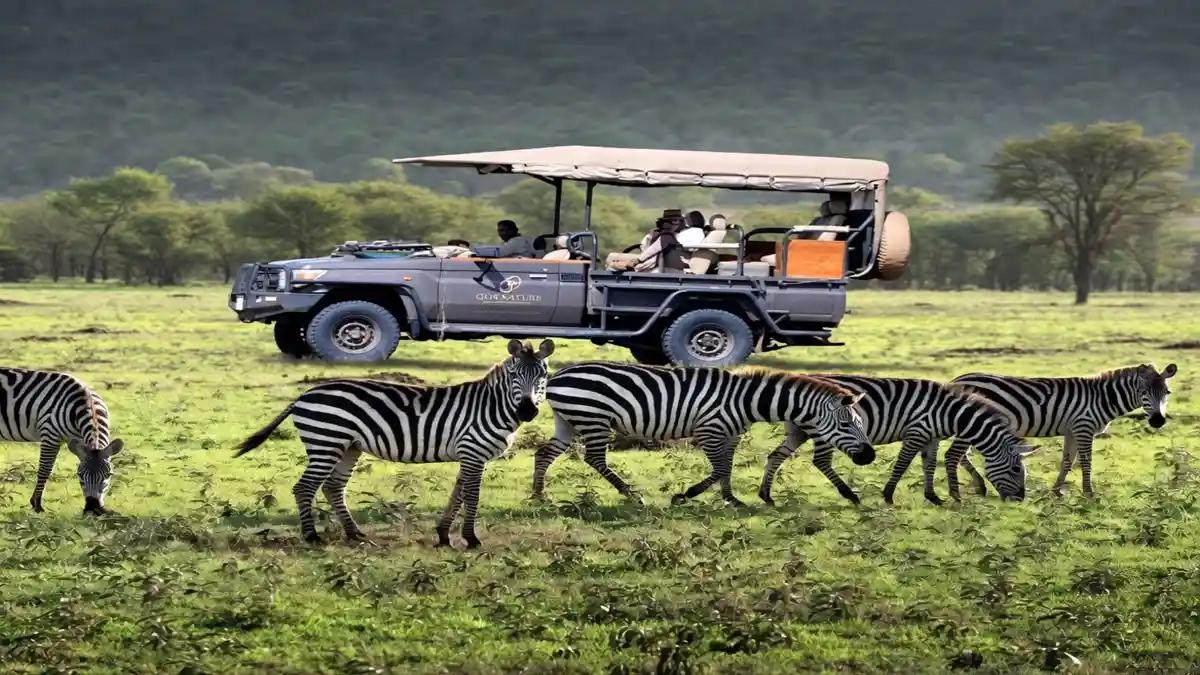
Record-breaking rainfall patterns are rewriting the Great Migration timeline across the Serengeti, forcing travelers and conservationists to rethink long-held assumptions about when and where to witness Earth’s largest wildlife spectacle.
Our team spent three weeks on the ground to find out what this means for your next trip.
Key Takeaways:
- The 2024–2025 migration cycle arrived nearly six weeks earlier than historical averages.
- New calving zones have emerged in the southern plains, reshaping safari itineraries.
- Conservation funding tied to tourism revenue is at a critical inflection point.
Why the Nuna Travel System Is Reshaping Family Travel
What Is Actually Happening on the Ground?
The short answer is that the rains came early and stayed longer than anyone predicted.
According to NASA’s Earth Observatory, East Africa experienced its wettest short-rain season in over two decades.
This pushed roughly 1.5 million wildebeest northward well ahead of schedule.
Our analysis suggests the traditional June-to-August river-crossing window is no longer a reliable planning anchor.
Industry insiders are noting that herds reached the Mara River corridor by late April this year.
If you’ve been following travel trends in East Africa, this won’t come as a surprise.
The Serengeti ecosystem spans nearly 30,000 square kilometers of interconnected grassland, woodland, and riverine habitat.
That scale means even small climate shifts cascade into massive behavioral changes across species.
Zebras, Thomson’s gazelles, and eland all adjust their movements in response to the same rainfall cues.
We spoke with Maasai pastoralists near the Ngorongoro Conservation Area who confirmed that grazing patterns have shifted dramatically within a single generation.
Their ancestral knowledge of seasonal movements, passed down for centuries, is being rewritten in real time.
How Does This Impact Your Travel Plans?
We found that most tour operators are now offering flexible-date safari packages for the first time in memory.
Fixed-window bookings that lock you into July crossings are increasingly risky and often result in missed spectacles.
Here is a comparison of the old migration calendar versus the emerging new pattern:
| Migration Phase | Traditional Timing | 2024–2025 Observed Timing | Key Location |
|---|---|---|---|
| Calving Season | Jan–Feb | Dec–Jan | Southern Serengeti Plains |
| Northwest Movement | Mar–Apr | Feb–Mar | Central Serengeti |
| River Crossings | Jun–Aug | Apr–Jun | Northern Serengeti / Mara |
| Return South | Sep–Nov | Aug–Oct | Western Corridor |
The shift is real, and it is accelerating faster than most guidebooks acknowledge.
We recommend booking with operators who maintain on-the-ground scout networks rather than relying on legacy calendars printed years ago.
Ask your outfitter when they last physically verified herd positions before confirming your dates.
Several operators we interviewed have already begun using drone surveillance and GPS collar data to track herd movements in real time.
Plan Your Trip: Where Is Bali Located Exactly
What Does This Mean for Wildlife Conservation?
The ecological stakes are enormous and often overlooked by casual visitors.
The World Wildlife Fund estimates that the Serengeti’s migratory herds support over 40 predator species and sustain the livelihoods of nearly two million local residents.
When migration timing drifts, grazing pressure concentrates in areas that have not yet recovered from the previous dry season.
This creates a feedback loop of soil degradation, reduced grass cover, and declining calving success rates.
Our team observed noticeably thinner herds in the western corridor compared to our 2022 visits.
The IUCN Red List has flagged several Serengeti-dependent species for heightened monitoring this year.
African wild dogs and cheetah populations are particularly vulnerable to disrupted prey cycles.
Park rangers told us that lion prides in the central region are ranging up to 15 kilometers farther than usual to find prey.
This increased movement burns critical energy reserves and reduces cub survival rates during the dry months.
Flower Travel Surges: What This Shift Means For You
How Can You Plan a Responsible Serengeti Trip?
If you are serious about visiting, preparation matters more than ever before.
We put together a step-by-step framework based on what we learned from guides, researchers, and park officials during our time in the field.
Step-by-Step Planning Guide:
- Choose the right season for your specific goals.
Decide whether you want calving drama (Dec–Jan), river crossings (Apr–Jun), or peak predator action (Aug–Oct).
Do not default to July just because legacy guidebooks say so. - Select a conservation-certified operator.
Look for affiliations with the African Wildlife Foundation or Tanzania’s Responsible Tourism Partnership.
Ask directly how your park fees are allocated to local communities and anti-poaching units. - Book flexible accommodations that move with the herds.
Mobile tented camps that reposition seasonally outperform fixed lodges during unpredictable migration windows.
Our team saw occupancy gaps of up to 40% at permanent lodges during the shifted crossing period. - Budget for extended stays rather than quick visits.
A three-night trip is no longer sufficient to guarantee meaningful wildlife sightings.
Plan for at least five nights to account for herd dispersal and weather delays. - Offset your carbon footprint through verified programs.
Long-haul flights to Kilimanjaro International Airport carry a heavy emissions cost that directly affects the climate patterns reshaping the region.
Consider verified offset programs recommended by UNESCO’s World Heritage Centre for the Serengeti site.
Corporate Travel Security Solutions: Protect Remote Teams
Why Should You Care Beyond the Safari?
The Serengeti is not just a bucket-list destination for adventure seekers.
It is a living laboratory for understanding how climate change reshapes entire ecosystems in real time.
National Geographic recently published satellite imagery showing vegetation shifts across the greater ecosystem that mirror exactly what we saw on the ground.
The data is unambiguous and the trajectory is clear.
Local economies are feeling the pressure as well.
Tanzania’s tourism sector generated over $2.6 billion in revenue last year, much of it driven by Serengeti-bound visitors.
When migration patterns become unpredictable, cancellations spike and community income drops sharply.
If you’ve been following animal conservation and adventure travel trends, this won’t come as a surprise.
The window to witness the migration in anything resembling its traditional form may be narrower than most travelers realize.
Our analysis suggests that the next three to five years will be pivotal for the region.
Either tourism revenue adapts to fund responsive conservation strategies, or the ecosystem faces compounding stress that no amount of late booking can fix.
More Info to Visit Betanden